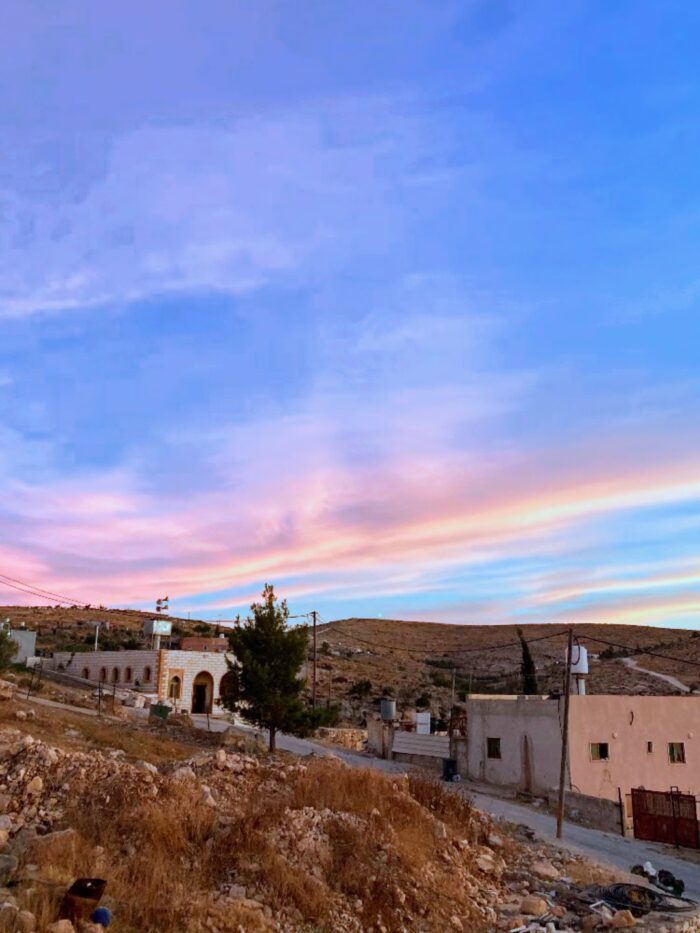
The Ma’on settlement grows like a cancer beside the Palestinian town of Tuwani. It was named after an ancient biblical town where David fled from King Saul, though the actual biblical village where Ma’on got its namesake has been identified as Khirbet Ma’in, three kilometers away. Today, all that remains of the ancient village is a ruin-turned-archeological-site. During the Roman and Byzantine periods, Khirbet Ma’in had a small Jewish population that existed beside the Christian district. However, the Jewish village was abandoned sometime during the late Seventh Century.
Donate to sustain the work, here!
During the British Mandate, before the establishment of Israel, the names of around 3,000 Palestinian historical locations were Hebraized, including 340 villages and towns, 1,000 ancient ruins, 560 valleys and hills, 380 springs, and 198 mountains and hills. Palestinians consider this an extension of the Nakba, as renaming policies work to deliberately erase their history and connection to the land. Hebraization of place names was encouraged by the Israeli government, with the idea that it would help newly immigrating Jews from Eastern Europe and North America to forge a connection with the land. Renaming allowed Zionists to invent a sense of special Jewish ownership over an area that had previously been inhabited by endless peoples and empires throughout the ages. Often, these sites had no preexisting Hebrew name.
The modern settlement of Ma’on began with an outpost erected in 1982 by members of the Zionist youth movement Bnei Akiva. It expanded further in the early 2000s when dozens of new homes were built on the privately owned Palestinian land. Now Ma’on houses more than 600 settlers.
Since its creation, Palestinians have not been able to access their land nor use the roads around the settlement. They experience frequent attacks from hostile settlers and their cultivated fields have been destroyed and their olive trees cut down. Poisoned barley laid around water sources is another common tactic of the settlers to ethnically cleansing the indigenous people off their land. Settlers are known to steal sheep and goats directly out of people’s yards and cut holes in water tanks. Furthermore, the growth of the settlement cut off the only road from Tuba to Tuwani, which in turn caused the walk to school to grow from three to 20km. In 2010, UN-OCHA made a specific report on the frequent attacks on children who attempted to use the road to get to school.
Jonathan (recently changed to Yonathan) Gabbai is one of the most militant Zionist settlers in Ma’on. Born in Texas to a wealthy ranching family, he moved to occupied Palestine in 2001 to become a rabbi and now raises cattle for meat in a large facility on the western side of the settlement. His website boasts that they recently hosted a beef and buffalo brisket feast for IOF soldiers. In an interview with Eve Harlow, the director of tourism for the One Israel Fund, he referred to the ongoing colonization of the land as God’s work, and Eve commented on his supposed bravery. “You are out here in an area that would otherwise be overrun by Arabs,” she said. “We see that going on all over the place… wherever there is an empty hill.” He replied that although he gets many sleepless nights, the army appreciates him being there because he “makes their job easier.” He did not explain precisely how he does this. He went on to talk about how often Palestinians come to try to steal his cows (which never once has actually happened).
Hearing his blatant lies in this video fills me with rage and reminds me of the unchecked racism and sense of entitlement Zionists have. He bemoans the hardship involved with stealing land, while even his cows get more water and electricity than people living a kilometer away in Tuwani do. In fact, Palestinians in the area are connected to neither the water supply nor the power grid.
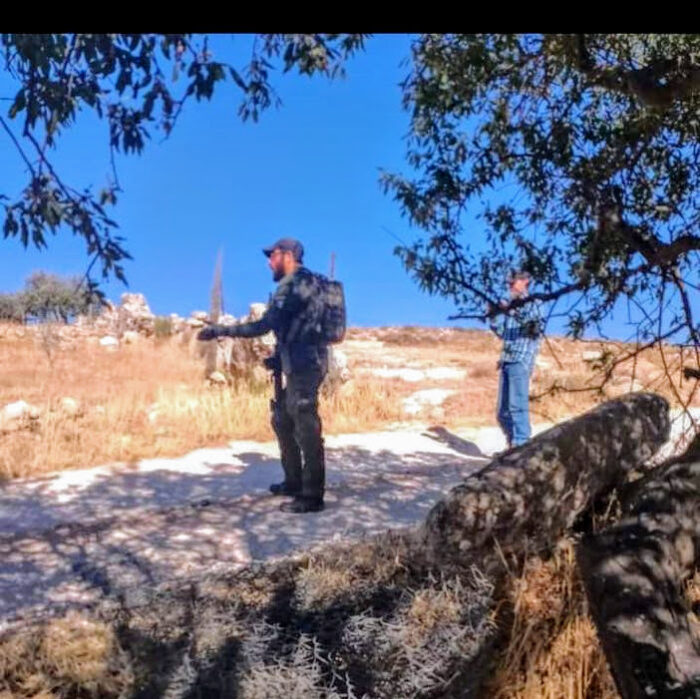
Last night I stayed with a family who lives in an unfinished concrete house on the edge of the village. One could throw a stone from their front door to the guard tower marking the border of Ma’on. Yonathan Gabbai drives his oversized grey Toyota truck frequently by this house, choosing to go through Tuwani instead of using the settler-specific roads into the settlement’s main entrance. The family has had the misfortune of meeting Yonathan many times.
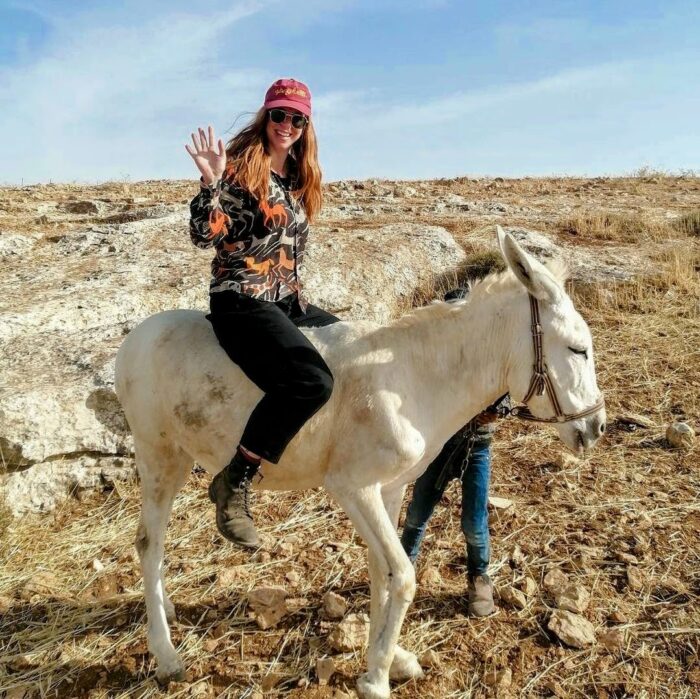
The father, who is one of the few people in town who can speak English, talked to me about the violence Yonathan has perpetrated against his family, while Yonathan made his daily rounds of intimidation, driving back and forth past the window. Yonathan destroyed the solar powered cameras intended to deter property damage, stole the family’s flood light and attached it to the settlement outpost so that it now shines directly into their home, and stole their white horse and beat it until she could barely walk before returning the animal. The father lists off the crimes, his voice weary. Yonathan has also beat him up in his own home and still attempts to break in and enter on occasion, which is why the family requests nightly presence from international activists. When we are there he is less bold. Still, though, he drives slowly by the house in green fatigues meant to resemble a soldier’s uniform. Our eyes meet for a moment and he grins and waves before finally making his way to his ranch.